
Sleep Wisdom From Our Ancestors
Reclaim your slumber with a modern take on some old-fashioned habits.

Reviewed: December 1, 2025
Do you struggle with insomnia or just want to optimize your sleep? Are you tired despite doing everything right?
Most of us know that poor sleep can lead to a wide range of persistent health issues like obesity, diabetes, and depression. Not to mention dulling our brains, making us irritable, and increasing our chance for accidents. It also suppresses the immune system, allowing us to get sicker more often. The list goes on.
So, it makes sense to address the issue, especially where it doesn’t take much effort or expense.
But how to do it? Pose the question online and you’ll get plenty of solid advice. Mind your diet, move about during the day, follow a sleep schedule, and keep the bedroom cool and dark, among others. Our early ancestors didn’t have the internet, but they did tend to follow these methods as a matter of circumstance. Maybe it’s time we dug deeper into their sleep lives to see what we can glean.
Lighting the way
If you go back in time far enough, you might imagine people sleeping like the fellow pictured above (minus the jeans). While this setting appears relaxing, eventually our hapless guy will end up with ants in his pants, body drenched in rain, or worse. Clearly, sleeping in the open air is not the most comfortable long-term solution, at least for those of us accustomed to a level of comfort provided by cozy mattresses and safe indoor spaces.
But there are some things our ancestors got right about sleep, whether they were conscious of it or not. The role that light plays is one of them, and there are many tactics you can use to exploit this. In short, spending more time in light during the day while minimizing your exposure closer to bedtime can set up your body’s circadian sleep cycle for success.
While not always possible, letting the sun wake you can be a more natural and less stressful way to live. There is a seasonality to sleep as the body wants more of it in the winter when nights are longer, which means sleep needs tend to vary throughout the year.
Unfortunately, the time we must wake is often fixed and dictated by society. Many workplaces offer the flexibility to start work when it’s light out, but schools still tend to expect young children to wake before sunrise for much of the year, which contradicts CDC guidelines for children’s physical and mental health.
Forcing students en masse to rise in complete darkness, day after day, can hamper their learning and well-being.
While we can put our kids to bed earlier, school start time itself is not something we can easily change. So let’s look instead at some things the average individual can do to sleep better.
Tune the temperature
The environment in which our ancestors found themselves was one in which nights were naturally cooler than the day. It turns out we sleep better when it’s cooler (but not too cold). For those of us fortunate enough to live in a temperature-controlled environment, that means dialing down the thermostat about an hour before bedtime to create a cooldown period that promotes sleepiness.
Conversely, set your thermostat to increase the temperature about an hour before you rise, as the sun might do. That helps raise your body temperature and wake you, making it easier to get out of bed. If your thermostat is not programmable, this is one of many reasons that make it worth upgrading.
Nights were automatically cooler even before modern air conditioning. We sleep better cold.
The ideal temperature for sleeping will vary among individuals based on age, gender, overall health, etc. A temperature range in the 60’s (Fahrenheit) is generally suggested for optimum health and sleep quality. During the heating season, this is great as it means we can save money on heating by dialing down the thermostat to let the house cool down naturally at night.
During the cooling season though, it’s the opposite as your air conditioner has to work overtime to get your house down to the 60’s from a normal daytime setting in the 70’s. (Though if it’s cool enough and not overly humid, you could also open windows.)
For that reason, rather than dictate a specific nighttime temperature, I’ll suggest starting with 3-6° down from your daytime setting and then adjusting to individual preference from there. Even a small temperature setback should help with sleep if your body is adapted to the higher daytime setting as its baseline.
As someone who tends to prioritize energy efficiency over short-term personal comfort, I set my thermostat to 77° during the summer day and drop it to 75° at night while also ditching the comforter. At the start of my area’s humid summer, these settings can make it feel slightly muggy and uncomfortable, but after a few days the body adapts.
Using a room fan “drops” the temperature further, for a real-feel around 71°. Not quite 60’s, but probably good enough for many of us after that initial adjustment period. YMMV.
A room fan uses a whopping 99% less electricity than central air conditioning.
Room fans simulate what our ancestors would have experienced with a natural breeze blowing while they slept outside or around open windows. Fans are great because they reduce the need for AC while using supremely less energy. The key is to use them correctly, turning them off when leaving the room. Unlike AC, fans don’t cool the room, only your body (by dissipating heat/sweat from skin), so leaving them on when no one is there just wastes energy.
The other point to keep in mind with fans is they are ineffective, even harmful, at air temperatures exceeding about 95°, because at that point they are just blowing hot air on you and making heat exhaustion more likely. But as long as you are using the AC in tandem with your fans you won’t hit this problem.
Floor sleeping fun
Remember when you were little and slept on a makeshift bed on the floor during a family get-together, camping trip, or sleepover with friends? Chances are, you paid little attention to bed comfort (or lack thereof) as the overall experience took center stage.
For most of human history, floor sleeping was the norm. Resuming this tradition would not only be feasible for many of us, it also has hidden benefits, particularly in warmer climates. For one thing, we learned earlier that temperature matters, and that keeping things on the cooler side is better for sleeping. Given that, are there ways to cool down your bed without touching the thermostat?
Well, the location and placement of the bed play a role. When trying to naturally lower the temperature for sleeping, we can take advantage of the fact that hot air rises and cool air sinks.
For example, if your area has hot summers, you could opt for a bed that sits close to the floor where it’s 1-2°F cooler. This could be a platform bed, futon, or floor mattress, such as the foldable mattress shown below. I have even slept on an inexpensive air mattress for weeks and have found it to be a quite comfortable, if temporary, solution.
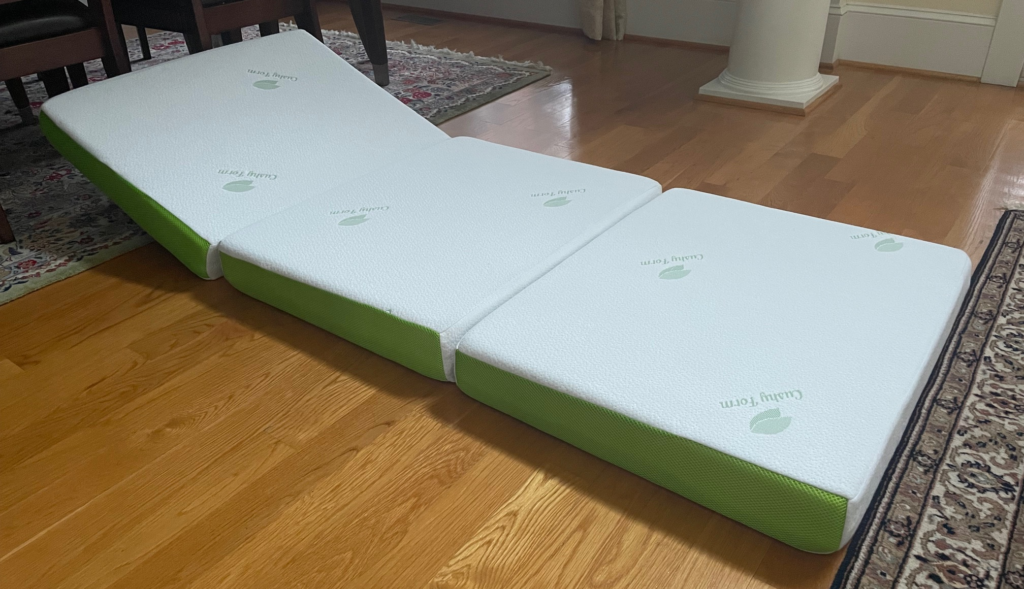
Another type of floor mattress is the traditional Japanese bed. It consists of one or two stacked roll-up mats that are placed directly on the floor.
The advantages of a floor mattress, besides being cooler, include a minimalist aesthetic, low cost, eco-friendliness, small footprint, and portability. It also promotes bodily strength over time, engaging muscles when getting up that a tall bed does not.
The portability aspect is intriguing because it opens up new possibilities, like varying your sleep location by season. If you live in a multistory home, let’s look at how you could set up a summer “bedroom” on the first floor or even the basement, which would significantly reduce the need for AC at night, when cooling needs tend to peak from all that heat energy built up during the day.
How many of us use our bedrooms to their full potential? We often go there only to sleep, an inefficiency promoted by the presence of a large, fixed object in the middle of the room (the bed).
Rather than having a dedicated room that is used for only 8 hours a day but heated and cooled for 16 or even 24 hours, portable mattresses allow living areas to double as bedrooms, as long as privacy is not a concern.
For example, you could throw a sleeping mat in the family room for use at night and then roll it up and away during the day. If this seems silly to be doing on a recurring basis, ask yourself how much money you’d save on heating/cooling, bedding, and even housing costs since you wouldn’t need as many bedrooms.
At the very least, swapping an infrequently used guest room for this approach would save a ton of money since you could either downsize to a smaller home or repurpose the room for something that allows it to be used more often. (And if floor sleeping won’t work for your guests, the money saved on housing would be more than enough to put them up in a hotel every year.)
Floor sleeping is also safer. Consider children and the elderly, especially, who are more prone to falling off the bed. Then there are those weather-related events that call for sheltering in place. Hurricane or tornado forecasted? Put your mat in an interior room downstairs and away from the windows for some peace of mind at night. Possible flooding on the way? Migrate to an upstairs room instead.
Every year in the U.S., bed-related falls send hundreds of thousands of people to the ER.
Note that mold and mildew are a concern with any floor mattress since there is no space below it for air to circulate. But their portability allows us to easily prevent this by taking 30 seconds every morning to stow the mattress and allow things to air out.
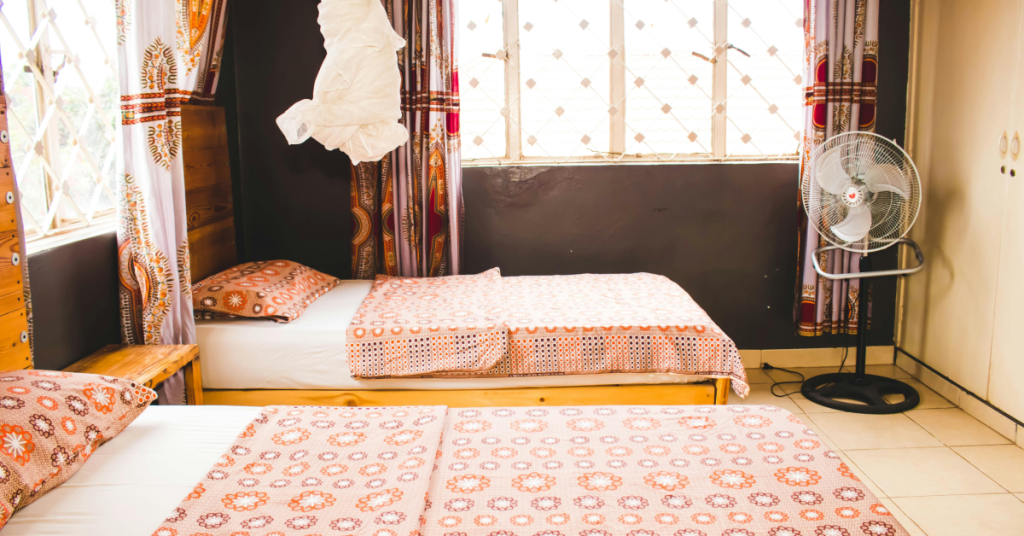
If you don’t need the portability and prefer something that looks more like a regular bed, there is the platform bed shown below. It is a more modern variation of the traditional Japanese bed, sitting higher than a floor mattress but lower than a Western bed. It can be considered a middle ground between the two but loses some of the advantages of both.
All that said, floor sleeping won’t be palatable to everyone given the idea of a Western bed in a proper bedroom is fully ingrained in those of us who grew up in those conditions. Then again, you have those camping trips mentioned–we humans crave comfort but will also go out of our way to sleep on the ground outside, even paying money for the privilege. It hearkens to the primal urge for a simpler way of life.
In any case, maybe this will inspire some folks to think outside the bed and find an approach that will save them money without compromising their lifestyle.
Too much tech
Our not-so-distant ancestors didn’t grapple with modern devices like smartphones and tablets–which was great in that the blue light emitted from screens doesn’t do us any favors in the sleep department.
Yet the other, perhaps more significant, problem is related to the content we consume. Late night work emails, negative news feeds, and endless doomscrolling on social media can all cause anxiety or just get us overthinking at a time when our brains should be winding down for the day. Being conscious of the types and amount of content we consume before bedtime can help keep unwanted brain activity at bay.
It’s also worth noting the EMFs (electromagnetic fields) produced by cell phones and other electronic devices. Much like blue light, EMFs may interfere with melanin production and compromise our sleep. Incidentally, they can also cause other health problems over time.
The science on EMF is still evolving, but in the meantime you can reduce any potential risks without much effort by simply keeping your phone and other devices a few feet away from your bed during sleep, perhaps on the far end of the nightstand or on the dresser. The other benefit of doing this is you’ll be less tempted to check your phone in the middle of the night if it requires more physical effort to reach it. Easy, right? Do this for a while and it’ll become a habit you no longer have to think about.
While we’re at it, consider silencing your phone to keep overnight notifications from disturbing your sleep. This includes sounds, vibrations, and light from the screen. Even if these events don’t wake you per se, they can cause “micro-awakenings” that pull you out of deeper sleep without your conscious awareness that it’s even happening. The result is a less restorative sleep that can affect your memory and thinking the next day.
If you need to allow certain notifications through in case of emergencies, most phones allow you to enable “Do Not Disturb” but create exceptions for important contacts.
Finally, there is one way our phones can actually help us sleep better. Noise is a modern sleep nuisance for some people, particularly city dwellers. If the sounds of traffic, sirens, or construction have you tossing in bed wishing for simpler times, the next best thing to moving away from civilization is to mask the noise. If you can’t (or don’t want to) use ear plugs, white noise apps can be a helpful alternative. There are some good ones out there, both free and paid.
Ancient grub
The food security and variety to which many of us have access is unprecedented in human history. Yet our ancestors would not recognize much of what is found on modern grocery store shelves, and having choices doesn’t mean we’ll make the right ones.
Research shows that whole foods, like the kind our ancestors ate, promote sleep efficiency. Think eggs, fish, nuts, seeds, fruits, veggies, and whole grains–basically the opposite of the processed foods that are pervasive nowadays.
The benefits of whole foods for sleep have been well-documented:
- They contain essential minerals that reduce stress/anxiety/depression, all of which can interfere with sleep.
- Some foods, like nuts, eggs, and certain fruits, actually contain sleep-inducing melatonin.
- Others, especially plant-based foods, improve sleep by reducing inflammation.
- Whole foods tend to be high in fiber, which improves gut health, which improves sleep.
In short, eating like our ancestors helps with sleep from multiple angles. A good diet really is one of the best ways to boost sleep quality, not to mention overall health.
How you time your eating matters too. Before artificial lighting, people mostly ate during the day because that’s when they could see. But this was also ideal from the view that eating too close to bedtime is unhealthy and can disrupt our sleep in several ways, as we now know:
- It keeps your core temperature up as the body focuses on digestion rather than sleep.
- It can interfere with the body’s hormones and circadian rhythm.
- Lying down after eating increases the risk of heartburn.
These problems are exacerbated by the modern trend of eating a heavy dinner due to the focus being on work during the day. Conversely, for our ancestors prior to the industrial revolution, the main meal was at midday, and this is best for protecting your sleep and overall health.
Then there is water. Many of us could use more, but drinking too much at night can send you to the toilet in the middle of the night, which would be counterproductive for sleep.
So, given all that, ideally you want your last meal and drink for the day to be light, and you want to finish it at least 2-3 hours before bedtime. (Apologies to the midnight snack lovers!)
When evaluating diet-based adjustments, don’t assume change will happen overnight. Although microbiome changes start happening on day one, our body can take weeks to adjust to a different diet and show results. Once you’ve made a plan, it’s important to stick with it for a while, even if it doesn’t seem to be helping at first.
Obviously, though, you may want to backtrack if your body is showing allergic or other adverse reactions to any new food. What works for one person’s body may not work for you. Since we’re all different, there is no “universally healthy” food product, so a level of experimentation may be needed. We are also in the early days of being able to use genetic testing to determine which foods may be optimal given our unique makeup.
A siesta fiesta
Siestas are another ancient sleep practice that has largely fallen by the wayside in the West, though it is still popular in parts of the world. Napping during the day is a natural activity, so much so that even chimps and other mammals practice it.
Now, in an ideal world, we would all sleep perfectly every night and napping would not be necessary. But reality is different–who hasn’t experienced the post-lunch slump and the decreased alertness and concentration that comes with it? It happens and it’s normal, though sometimes we do it to ourselves through suboptimal habits around food, sleep, and caffeine.
Delaying your morning coffee by a couple hours may prevent an afternoon crash.
That’s where the siesta comes in. If you find yourself drowsy in the afternoon, you might try listening to your body and actually napping. At a time when many of us would be looking for a caffeine hit, a midday nap can reinvigorate you even better than that cup of coffee. The key is to time it right and not overdo it. Only nap if you feel sleepy, and keep it under 30 minutes. Any longer and you risk harming your nighttime sleep, which would be counterproductive.
For the same reason, you don’t want to wait until too late in the afternoon to doze off. If your schedule or workplace won’t accommodate longer naps, note that even a 5-10 minute micro-nap can work wonders. Set a timer on your phone so you don’t go over.
In Japan, napping at work is not only culturally accepted but often admired–a sign of hard work to the point of exhaustion.
For an extra boost, a tea or coffee taken immediately before the nap will enhance the effects as the caffeine will start kicking in around your wake-up time. However, the caffeine may also interfere with your nighttime sleep, so only do this if you really need it or know your body metabolizes caffeine quickly. Caffeine typically stays in our system for 5-7 hours, though for some individuals it can take up to 12 hours to metabolize.
Embrace the siesta if you can. Let the body do what it wants instead of fighting it, and you’ll reap the benefits every time.
Conclusion
Societal changes facilitated by the clock and the light bulb have spurred much progress, but not without costs to our personal health. Modern life and technology challenge our natural sleep rhythms by fighting our biology, but we can counter that through lifestyle tweaks that bring us a bit closer to our ancestral sleep habits, which, in retrospect, was not all bad.
A healthy lifestyle, consistent sleep schedule, and comfortable sleep environment are the foundation of good sleep. In this post, we have delved deeper and considered some of the less obvious tactics for achieving our sleep goals, from controlling the surrounding light and temperature, to strategic napping, to rethinking the very idea of what a bed should be.
It’s also hard to overstate the importance of a diet of fresh, whole foods to keep our bodies in good working order. Our bodies are active even at rest and, if deficient in essential nutrients, cannot be expected to maintain a normal sleep rhythm.
Early humans certainly mastered the art of living in harmony with nature, even if they weren’t intentional about it. By reassessing aspects of our current lives and selectively adopting the ways of our ancestors, we can improve our sleep quality, our overall health, and the state of our wallets.